Adolescent Citizen Scientists
Teens improving the food environment
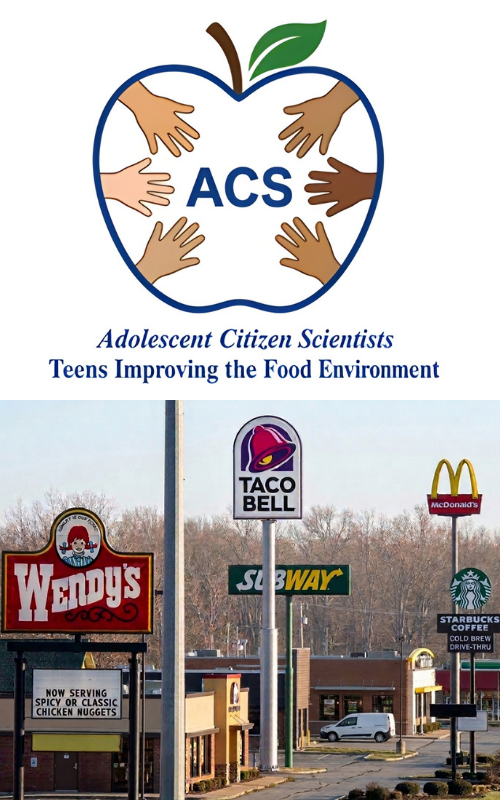
An overwhelmingly unhealthy food environment threatens the long-term health and well-being of our youth and exacerbates health disparities in low-income populations and communities of color. Community-level programs and policies are needed to improve local food environments, and young people can and should be part of the solution.
In this two-year project, researchers from the UConn Rudd Center for Food Policy and Health and the Hispanic Health Council trained Hartford-area youth to be adolescent citizen scientists (ACS). The ACS applied their newly developed skills to a community-based participatory research (CBPR) project, culminating in the development and implementation of a valuable food assistance resource for the Hartford community.
This website provides tools and lessons learned for community partners and researchers who wish to engage high school students in the design and delivery of community-engaged programs to improve their food environment.
- Training modules to teach students about nutrition, food marketing, health equity, research methods, program co-design, and designing a communication plan.
- Suggested procedures for conducting focus groups with high school students to identify barriers and opportunities for improving their food environment.
- Case study of the design and implementation of the students’ final project: Food Resource Guides for Connecticut students and families who face food insecurity.
![]() |
![]() |
About the Program
Project Overview
Our project aimed to support community power-building by empowering youth, creating connections between community partners, and collectively designing a program that will drive change.
- Over a two-year period, we trained and engaged two cohorts of ACS students at Hartford Public High School with approaches to co-design a community program to improve their food environment.
- In Year 1, the ACS participated in the design, implementation and preliminary data analysis of focus groups conducted with Hartford Public High School students to identify barriers to healthy eating that they experience in their community.
- In Year 2, the ACS designed, implemented and communicated the results of their final co-design project: Food Resource Guides. The Hartford Public High School Food Resource Guide provides information for families and students on food assistance resources in the school and community. The Connecticut Food Resource Guide provides information about food assistance resources available throughout the state.
|
Project Milestones |
||
| Year 1 | May-Dec
2024 |
|
| Jan-June
2025 |
|
|
| Year 2 | July-Dec
2025 |
|
| Jan-June
2026 |
|
|
The resulting project was enthusiastically received by the Hartford community, for the learning and community engagement opportunities it provided for high school students, as well as for the valuable food-assistance resources provided to the community.
Tips for Success
Throughout the two-year period, we learned a great deal about conducting community-engaged participatory research in partnership with adolescents in a school-based setting. Following are some suggestions for lessons learned and steps we found helpful.
1. Create a strong co-equal research partnership between academic researchers and a community organization that serves and reflects the culture of the community.
- Given the large Latino population in Hartford, a research team that included Spanish-speakers and members of the Hartford community was essential.
- Partnering with an organization with long-established connections in the community, including relationships with school administrators and other organizations, was invaluable.
2. Identify and engage champions on the school staff.
- Building relationships with school support staff such as librarians, internship coordinators, counselors, teachers, school food pantry coordinator, and other trusted school personnel, greatly facilitated student participation and program success.
- These champions enthusiastically supported and generously provided their time to the project, including identifying potential ACS participants, acting as a liaison between the ACS project coordinators and upper-level school administrators, assisting in recruiting participants for focus groups through existing school processes, and identifying and creating opportunities for program dissemination.
3. Acknowledge students’ challenges in committing time to all ACS activities.
- Many students hold significant responsibilities outside of school, including part-time jobs, family caregiving, participation in clubs or sports, and reliance on public transportation. Acknowledging students’ competing commitments and setting realistic expectations and flexible programming helped encourage higher ACS participation and attendance.
- If possible, integrate the ACS program with other school requirements, such as community service hours or senior capstone projects.
- Explore opportunities to incorporate the ACS program as a paid internship. We were able to pay the ACS for the hours they dedicated to the program through a local organization that recruits and places high school students in paid job-training internships.
4. Schedule ACS training sessions and locations to maximize student attendance.
- Explore whether students have common times available during the school day, such as lunch periods or early dismissal days. We found that holding regular training sessions twice a week during the school day helped to facilitate student participation.
- After-school hours were difficult to coordinate due to students’ work obligations, transportation challenges, extracurricular commitments, and family responsibilities.
- A safe, familiar, and easily accessible location for training is necessary. The school library provided the best option for our program.
- Off-site training locations are possible, but require additional considerations, such as school policies regarding off-campus activities and transportation requirements.
- Providing transportation support, such as bus passes or rideshare funding, may improve attendance and accessibility for off-site training and field trips. However, school and district policies regarding transportation should be reviewed early in the planning process. School policies may prohibit underage students from traveling in rideshare or staff vehicles.
- Providing students with clear directions, transportation instructions, and meeting location details helped reduce confusion and improve attendance at off-site events.
5. Maintain clear and frequent communication with ACS and school staff.
- One ACS coordinator was designated as the key contact person for students, which ensured that students knew who to contact with any issues or concerns. Having a recent college graduate in this role also increased students’ comfort level in communication with them.
- Helpful strategies for communicating with ACS included sending reminder texts before meetings and training sessions, asking students to confirm attendance, utilizing group chats, providing assignment reminders through text messages, encouraging students to regularly check their email, and asking students about their preferred means of communication.
- Due to students’ more consistent use of text messaging, combining email communication with text reminders improved responsiveness and participation.
- Keeping all levels of school leadership consistently informed and engaged (including internship coordinators, principals and district staff) reduced confusion and strengthened institutional support for the project.
- Consistent communications with school personnel also helped to ensure that research staff understood school policies and procedures and internship procedures and requirements
6. Make educational materials and training sessions engaging and accessible.
- Programs should allow students to grow, develop confidence, and contribute their own perspectives and ideas throughout the learning process.
- The most effective training materials were interactive and engaging, easy to understand while still educational and skill-building and designed to encourage participation and discussion. Creating a learning environment where students felt encouraged to ask questions and participate openly helped strengthen engagement and confidence.
- Students valued the hands-on experience they gained in designing and implementing focus groups and the Food Resource Guides, creative activities (e.g., designing a logo, writing social media posts, producing a podcast), and participating in school events (e.g., handing out flyers at parents’ night).
- To help students focus during training sessions, provide healthy snacks and beverages during the sessions, offer meals if sessions occur during lunch or extended hours, and include frequent breaks.
- Field trips to visit community partners (e.g., food banks), meetings with local policymakers, and visits to the CT Legislative Office Building were very well received and increased ACS’ interest in community involvement.
7. Build trust and individual relationships with students
- A small team of ACS program coordinators conducted the training and attended most sessions, which allowed them to build rapport with the students.
- Building strong relationships between ACS program coordinators and students, as well as between individual ACS members, played a major role in student engagement and retention. Trust and mutual respect for all members of the group (ACS coordinators and students) helped students feel more comfortable participating and contributed to stronger group dynamics.
- Helpful strategies included icebreakers and get-to-know-you activities at the beginning of each session, open discussions, and safe space for students to voice their own opinions and experiences.
About Us
The UConn Rudd Center for Food Policy and Health promotes solutions to food insecurity, poor diet quality, and weight bias through research and policy. To stay connected with our work, please subscribe to the Center's monthly mailing list and connect with us on LinkedIn. Additionally, to learn more about the Rudd Center's research examining how food marketing negatively childrens' and teens' diets and health, please visit our Food Marketing Homepage.
The Hispanic Health Council promotes equity and addresses health disparities for Hispanics, Latinos, and other vulnerable communities through research, advocacy, and culturally resonant services. Learn more at: hispanichealthcouncil.org
Research Team
- Frances Fleming-Milici PhD, PI, UConn Rudd Center for Food Policy
- Sofia Segura-Perez, MS, RD, Co-PI, Hispanic Health Council
- Ashley Hernandez MPH, Research Assistant, Hispanic Health Council
- Jennifer L. Harris, PhD, Consultant, UConn Rudd Center for Food & Policy
- Rafael Perez-Escamilla, PhD, Consultant, Yale School of Public Health
We Would Like to Thank
Hartford Public High School (HPHS)
HPHS principal, teachers, counselors, students, and other staff members were integral to the conception, design, implementation, and dissemination of this project.
Community Advisory Board (CAB)
Our Community Advisory Board provided expert guidance and ensured the success of the project by connecting us to relevant community partners and amplifying the reach of the Food Resource Guide:
- Luis Rodriguez-Porter, Director of Volunteer Services, Connecticut Foodshare
- Ben Dubow, former Executive Director, Forge City Works
- Annie Wellington, EdD, Freshman Academy Lead, Hartford Public High School
- Rebekah Castagno, Director of Health Initiatives, United Way of Central and Northeastern Connecticut
ReadyCT
ReadyCT staff members gave extensive support to the interns and the research team throughout the project. Their willingness to partner with the ACS program made the project possible. Students who participated in the ACS program received an internship with paid compensation for the time they dedicated to the program through our partnership with ReadyCT. ReadyCT is a Connecticut organization that provides career training, workforce development support, and paid internship opportunities for high school students.
Robert Wood Johnson Foundation
This work was supported by a grant from the Robert Wood Johnson Foundation, Princeton, NJ. The views expressed here do not necessarily reflect the views of the Foundation.
For more information: frances.fleming@uconn.edu